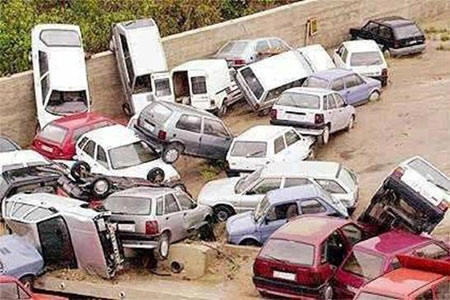
Good parking spaces on the Berkeley Campus are at a premium especially on rainy days in Tampa. Berkeley has about 1400 students in grades Prek -12, and 300 full-time faculty and staff. Sampling suggests that there are between 600 to 800 drivers seeking parking spaces on any given day.
There are only 300 total parking spaces on campus, and although there is no simple way to estimate the “desirability” of different spaces (this depends on where one wishes to go on campus) perhaps only 100 of the available spots are both convenient and generally provide a dry walk to the central campus on rainy days.
For many years, by tradition the best parking spaces were reserved for visitors and the handicapped, and the next best for faculty and staff members. Faculty and staff did not pay for their spaces. Other reasonably close parking spaces were distributed to seniors for a fee, and distant campus parking was given to underclassmen for slightly smaller charge.
Not surprisingly, students frequently complained about the arrangement, particularly on rainy days. The new Headmaster at Berkeley has announced that the parking situation is being reassessed and he has invited all concerned to submit alternative views. Five major approaches have been discussed so far:
1. LEAVE THINGS THE WAY THEY ARE. This is quite popular with the faculty and staff. Faculty are seldom late to class in the morning as they are guaranteed a good space close to campus, and most students can manage pretty well if they allow a bit of extra time to get from the far lot to the main campus. Advocates of this plan point to the traditions of the school in recognizing and rewarding seniority.
2. FIRST COME, FIRST SERVED. This would let seniors, faculty, and underclassmen compete for the best parking places, which would then go to those who wanted them the most. Your willingness to set the alarm for 10 minutes earlier to get a good space would be the best measure of how important the space is to you. Who can make a better decision for you than yourself! Advocates of this plan emphasize the equality of opportunity: everyone has the exact same chance at the best parking spaces.
3. A MARKET SYSTEM. A third alternative would allocate space by selling them. Let the people who are willing to pay the fee park in a specific spot all year. Spaces could be divided into 3 or 4 classes with A spaces being the best and having the highest price, B spaces the next best, and C the least attractive and furthest away. Thus , those that were willing to pay the most would get the most desirable spots, those who chose to less would get the less attractive B spaces, and the least expensive spots would go to those who chose spaces in the C lot. Some short term spaces could be reserved for visitors with parking meters charging and hourly fee. Advocates of this plan argue that it would give the spaces to those who were willing to pay for them, which is the way everything else in America is allocated. This would let the faculty and students themselves determine who got the best spaces through freedom of choice; everyone would get the spot they were willing to pay for.
4. DEMOCRACY. Another method discussed was convening a special parking committee of faculty and students to determine who got which spaces each year. This would be more similar to how our American system of government works, in which committee members would be elected by secret ballot the same way student leaders are chosen, although there was is some dispute over how to allocate the seat on the committee between different groups.
5. RANDOM CHOICE. The Math Department has proposed another alternative: distribution through a lottery. Numbered tickets would be sold to those who wished to buy them, the numbers would then be put into a bowl and drawn out randomly. Although some people pointed out that this might be wasteful, as it does not take into account the actual preferences of the students and faculty and some spots may even be won by individuals without cars, the Math Department has suggested that an online market like eBay should be established on Edline which would allow those with parking spaces put their spots up for auction to the highest bidder. Presumably the price of various spots would be driven up or down according the demand for each spot.
How should Berkeley allocate its limited supply of parking spaces?
What system of allocating spaces do you
recommend?
Why?

Take 20 minutes to discuss a solution with the class. In addition to the suggestions above, feel free to combine the plans in different ways, or to come up with your own creative alternative. When discussing your solution consider the following questions:
- What is the central problem of parking at Berkeley?
- What behaviors or expectations are encouraged or discouraged by each alternative method of distribution?
- What should be the primary goal of any redistribution plan for parking spaces?
- What are 3 reasons why your plan is the best plan for Berkeley?
Write up an outline of your plan using the following Brief Criteria, and be prepared to present, justify, and defend your plan to the class for a Brief grade.
-
This brief should be 5 paragraphs; a minimum of 2 sentences, no more than 4 sentences per paragraph.
-
All sentence must be complete sentences.
-
The first paragraph of this Brief will be the Introduction.
-
The first sentence of this Brief will be the THESIS. The Thesis is a clear NORMATIVE (subjective) statement of the position the brief will take on the issue using the vocabulary and concepts from economics:
-
What is the best method of allocating Berkeley's limited supply of parking spaces?
-
-
The second sentence in the Introduction will be the OUTLINE for the rest of the brief listing the three supporting topics which will be presented to back up the position supported by the Brief.
-
The next three paragraphs will be Support paragraphs. Each support paragraph will begin with a Topic sentence, and will include at least one POSITIVE (objective) FACT taken from your own knowledge which backs up the THESIS.
-
A Brief should NEVER be in first person.
-
A Brief should ALWAYS be IN YOUR OWN WORDS (IYOW); you may NOT cut and paste from the internet or any other source or you will receive a zero and this will be reported to the Honor Council.
-
Your brief should ALWAYS be printed out, not hand-written.
-
Your Brief is due at the end of the class today; assignments turned in after class will be penalized one point per day late.