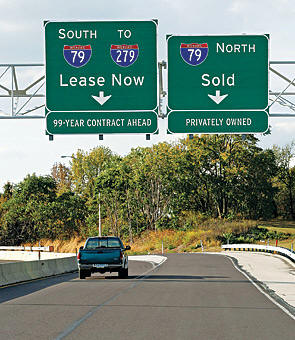
The Case For Privatizing The Highways
No. 231 June 27, 1995
State highways should be sold section by section to private owners. Traffic congestion is a major annoyance to tens of millions of Americans and a $100 billion annual economic loss. The traditional answer to highway backups, mass transit and carpooling, have not worked. Since 1956 most highways have been financed by gas taxes. Now those taxes are being siphoned off to general revenue, and what is left for roads goes largely for maintenance and rebuilding, not new building. With private operators responsible for maintenance as well as improvement of the highways, gasoline taxes and other government charges for roads could be phased out. New ideas and new technologies would be applied. For example, to eliminate stop-and-go conditions, private highway operators could vary toll rates by the minute to encourage less peak-hour travel. The economics, politics, and technology are right for progressively privatizing highways and creating markets in highway service.
Backups on the highways are a daily source of frustration to tens of millions of Americans. Our cars and highways are engineered to transport us at 50 to 70 miles per hour (mph), yet in rush hours the highways regularly clog up and average speeds are 15 to 20 mph and declining each year. Worse perhaps than the average speed of travel is the variability of backups, which makes travel in rush hours so unpredictable and punctuality so difficult. The daily commute and other trips become tiresome irritations and a waste in our lives. Freeway systems are designed with generous high-speed lane widths, long acceleration and deceleration lanes, pull-off shoulders, and super-elevation on curves, as well as long sight lines and no cross traffic. Superhighways are set up for our cars and trucks to cruise along safely at 50 to 70 mph, yet they are becoming parking lots full of stop-and-go traffic for hours each day. That is frustrating to drivers because the time lost is largely unproductive. Drivers find it hard to relax in jammed traffic because they keep wondering how late they are going to be, whether they should try another route, and whether the congestion ahead will suddenly clear.
The communist economic model has been discredited and abandoned in most places, but not on America's highways. Generally, our highways are built and managed by state agencies and offered "free" to the public. Instead of paying for road use directly, motorists provide highway funds through a byzantine system of license fees, registration charges, gas and diesel taxes, truck charges, special transportation sales taxes, and development district levies. After some of that money has gotten through the various bureaucracies, tax agencies, treasuries, and transportation administrations at different levels of government, after some has been diverted to transit systems and even general government revenues, what is left for roads is political "pork"--allocated by deal-making between various government actors in Washington, state capitals, and county seats.
Communism failed because prices were not flexible to match supply and demand; because stores were bureaucracies, not businesses; and because revenues went into a central treasury and did not fuel increased capacity and improved service. We in supposedly capitalistic America suffer communism--an unpriced service provided by an unresponsive monopolistic bureaucracy--on most of our highways. Our manifestation of shortage, our equivalent of Russian lines at stores, is daily highway backups. There is no price on rush-hour travel to clear the market. There is no revenue stream directly from road users to road managers to provide incentives either to manage existing capacity to maximum consumer advantage or to adjust capacity to demand.
"Whenever the price of using some valued good does not increase as demand increases, that good will be in short supply. Shortages will be acute if supply cannot readily be enhanced," wrote the Transportation Research Board, an arm of the National Research Council. "In the absence of efficient pricing, motorists who drive on congested facilities are not required to pay for the delays they cause each other, and these delays are substantial. The wasted time and fuel are estimated to cost (at least) $40 billion annually."
In 1991, congestion caused 4.6 billion gallons of fuel to be wasted, cost 10.2 million hours of delays each day, and had an overall cost of $44 billion. About half of that cost was incurred in five large metropolitan areas--Los Angeles ($7.8 billion), New York ($6.6 billion), San Francisco- Oakland ($2.8 billion), Washington, D.C. ($2.4 billion), and Chicago ($2.4 billion). Washington had the greatest congestion cost per vehicle ($1,440), followed by San Bernardino- Riverside, California ($1,340), New York ($1,090), and Los Angeles ($1,000). San Bernardino-Riverside had the highest congestion cost per person ($870), followed by Washington ($760), San Francisco-Oakland ($740), San Jose ($670), and Los Angeles ($660).
And the trend to gridlock is not confined to the largest cities, twenty-five of the 50 largest cities had expressway and arterial traffic at saturated levels in 1991, compared with 11 of the 50 in 1982. Congestion has has now gotten "into the suburbs, with street systems designed for service to residential areas now overburdened with traffic headed to large shopping malls and business parks. Because many internal combustion engines operate most efficiently at a steady 40 to 50 mph, stop-and-go traffic adds considerably to air pollution--emissions of carbon monoxide and volatile organic compounds are worst at low engine speeds. In turn, the extra pollution increases the pressure, via the Clean Air Act, the Environmental Protection Agency (EPA), and local regulatory agencies, to adopt cleaner (but more expensive) fuels, including highly expensive battery-stored electricity.
Mass transit does not seem to help to avert congestion. Both the Washington and San Francisco-Oakland areas in the 1970s and 1980s developed and continued to expand splendid new passenger rail systems at a cost of billions of dollars, yet those cities are among the gridlock leaders both in absolute terms and in congestion growth. New rail systems tend to gain their patrons from other transit systems--buses and vans--not cars, and those systems approximately double trip costs.There is another trend as well: the move to small rural towns way beyond the edge. That trend, facilitated by the telecommunications and computer revolutions, points to the need for emphasizing adaptability in any transportation system, which suggests the general superiority of rubber tires on asphalt to steel rail technologies.
Congestion is a function not of traffic itself but of traffic compared with highway capacity. Opponents of roads and cars say that building extra highway capacity is futile. It is true that under highly congested conditions some demand for roads will be suppressed and that providing extra roads will therefore cater to latent demand. For example, if roads during rush hours have been congested, relieving the conditions causing the congestion will encourage some drivers who were driving during off-peak times to avoid congestion to drive during peak times. Also, adding capacity to one highway while leaving untouched another one not far away will attract traffic to the enlarged road. However, claiming that increasing supply in and of itself can increase demand displays an ignorance of fundamental economics or indicates a hidden agenda or a fatalistic sense that there is no hope of building out of congested conditions. Doomsayers hold that road builders would have to pave the whole countryside to provide enough roads. But demand for highway space is not infinite, and the three cities that saw a reduction in congestion in the 1980s all added major amounts to their freeway network--Phoenix added 302 new lane-miles, or 88 percent; Houston brought in an extra 378 lane-miles, or 23 percent; and Detroit introduced 171 new lane-miles, or 11 percent.
It is an understatement to say that building new highway capacity is often difficult. It is easier, perhaps, to build a new freeway than to build a new nuclear power plant in the United States. Opposition has been largely a matter of ideology--cars and freeways are considered "politically incorrect." The statist crowd just does not like the individualism of driving and the personal freedom a car provides. Socialists and liberals have been waging ideological warfare against the automobile and all its manifestations for several decades, and they have won major victories, including the suspension of most inner-city freeway projects in the 1970s.
They were not entirely wrong in what they said. The use of eminent domain to threaten property owners with expropriation was an indefensible practice of highway authorities. Some of the inner-city projects did not make social or economic sense. Many were just "pork"--products of the political process or the pet projects of large state bureaucracies and grandiose planners. But freeways cut off midway, leaving half-built ramps to grow weeds and rust 100 feet above the ground, left unfinished system links that could have provided convenient movement through and access to the downtown areas. Ironically, the killing of inner city freeways by protesters of the 1960s and 1970s accelerated the process the protesters so deplored--the relative decline of the old downtowns and the rise of dispersed highway-dependent development.
Critics of the current car and highway regime should, however, be conceded several points: highway users are currently not paying their way; the system of roadway pricing is riddled with inefficiency and unfairness; state highway agencies have gone from being overaggressive advocates of an engineering solution to being timid bureaucracies so cowed by small organized opposition groups and environmentalists that they have abdicated their responsibility to expand highway capacity to meet demand.
Although expansion of highway capacity is difficult, it is far from impossible. State highway agencies all around the country have been busy quietly adding capacity in the past 20 years by building extra lanes in the grass medians of freeways. But there is only a certain amount more of that kind of building that can be done.
New private firms formed to promote, develop, build, and manage particular highway projects for profit would certainly be more efficient than large state highway agencies, especially where complicated new systems like congestion pricing are being introduced and success will depend on a single-minded commitment to making a project work.
Such freeways are likely to enormously enhance real estate values for some distance around their interchanges. Although state highway agencies cannot legally trade on the enhanced land value of interchange locations, the value enhancement of a new highway provides a major invitation to corruption. But a private highway developer can publicly solicit right-of-way donations, contributions to the cost of interchanges, and investment moneys from landowners who stand to benefit. There is no reason why development highways should not be combined with land development in one enterprise so that a highway builder could buy land around proposed interchanges and benefit from the enhanced land value as well as from tolls. America's transcontinental railroads were built as much with the money to be made from developing land obtained along their routes as with fare and freight revenues. Edge-area freeways can undoubtedly be built sooner and cheaper, and with less scandal, by private enterprise than by state highway agencies.
The most comprehensive moves toward a highway market are in Washington, California, and Virginia, where legislation finalized private franchises for $30 billion worth of highways.
In California, the California Department of Transportation (Caltrans) solicited private-sector bids to build and operate toll roads. No state money was permitted to be used for either construction or operation, neither tolls nor speed limits are subject to regulation, and the state guarantees the franchise for 30-years.
The Dulles Greenway group purchased the rights to the new roads, and got its act together quickly. Workers toiled in double shifts for sixteen months and opened the roads a full year ahead of schedule. Fees for using the privately built inner lanes, known as the SR-91 Express Lanes, aree collected by debiting by radio signal motorists' prepaid accounts through a calculator-sized transponder stuck on the windshield. There are no tollbooths at which to stop. To justify the name "Express Lanes" and guarantee a smooth-flowing 80 mph ride, the project applies congestion pricing. Programmable toll rate signs at the entryway to the separate express lanes announce tolls which range from $0.25 to $2.50, depending on available capacity. The roads have had rates of profit between 17 percent and 25 percent in the first five years of operation.
One objection likely to be raised is that the facilities will be monopolistic. The degree of monopoly will vary with the alternatives available. Part of the process of tolling major highways will be restricting through traffic on local access streets, first so that the business is not lost from the highway and second so that local neighborhoods are not gridlocked with toll evaders. So some element of "monopoly" will be a necessary part of any project.
Two leading transport economists recently wrote that traffic congestion is a classic externality, especially pervasive and important in urban areas. The theoretical relationships governing it have been thoroughly studied. As a result there is a consensus among urban economists, and a growing proportion of other urban and transportation analysts, as to the first-best policies to deal with it: namely some form of (anti-) congestion pricing.
Disagreement centers on the practicability and political feasibility. There is legitimate resistance to tolls if they are seen as just another way to raise money. There is potentially a large amount of money in highway tolls. Kenneth Small of the University of California, Irvine, estimates that there is at least as much in congestion pricing revenues as in congestion costs--around $50 billion a year, just about enough to offset the $40 billion raised in federal and state gasoline and diesel fuel taxes and the $10 billion in state registration revenues. Small makes an interesting case for deploying congestion tolls in a package that would compensate losers, finance alternative peak-hour transit, and generally smooth the way politically for reform.
John Kain of Harvard sees the perception of tolls as taxes as the overwhelming obstacle. This obstacle to congestion pricing ought to be removed by returning all congestion price revenues, net of collection costs, to taxpayers in the form of a highly visible tax rebate. Another way to achieve that result would be for governments to progressively privatize their highways, phase down their gas tax and registration fees, and phase out their highway departments. That could be done in many different ways: by calling for bids, by putting sections of highway up for sale, by selling conditional franchises to build and operate.
Advocates of free-market solutions have a great political opportunity to get into the problem-solving business and win wide political support in the mid-1990s by advocating and organizing a solution for traffic congestion on our urban freeways. That solution consists of progressive privatization of major highway service funded by time- flexible toll pricing and concession rights, combined with the phaseout of gasoline and diesel taxes and the federal and state highway agencies that live off them.
Privatizing highways progressively and creating markets in highway service will make it possible to use resources more efficiently and to build as much highway capacity as people are willing to pay for. This argument for toll roads was made by Elkanah Watson in Commonplace Book of 1795: "No tax can operate so fair and so easy, as that of paying a turnpike (toll), since every person is 'taxed' in proportion to the benefit he derives from a good road, and all strangers and travelers are made equally tributary to its support. What can be more just?"
The politics is right--people are properly distrustful of large state bureaucracies that live off taxation, and they demand lower taxes. The state highway agencies have largely given up on providing new service.
The technology is right--tolls no longer mean inefficient congestion-creating toll plazas collecting quarters like beggars; tolls can now be collected through small, cheap transponder tags, attached to a sun visor or windshield, that hold a prepaid stored value that gets debited by radio signal while the motorist drives by at highway speed.
The economics is right--the costs of congestion are a huge and growing burden not only on the peace of mind of commuters but also on the economy that depends heavily on free-flowing transportation of goods and services. And once the highway system is shown to be paying its way with tolls instead of from the public purse, it will be easier to argue for ending government subsidies for mass transit, the costs of which are strangling our big cities.
The alternative to privatization and a market solution is not the status quo but growing government control in the form of mandated employee trip reduction planning, which forces businesses, under threat of fines, to coerce their employees into riding in carpools, vans, and buses and using high-occupancy vehicle (HOV) lanes. Government officials deliberately engineer highway congestion to force more mass transit use.
So there is a case for radicalism--for legislating that government will get out of highways and phase down the taxes that currently support them. Henceforth they will be funded by investors charging tolls and subject to competition. With a real marketplace in highway provision, we will have a test of what users are prepared to pay and a mechanism for persuading commuters and other travelers to adapt their travel patterns to make fuller use of spare off-peak highway space. The threat of creeping gridlock will be averted.
Peter Samuel is a freelance journalist who writes on regulatory affairs. His work appears in Forbes and National Review, and he is writing a book on Superfund.

-
This brief should be 5 paragraphs.
-
All sentence must be complete sentences.
-
The first paragraph of this Brief will be the Introduction.
-
The first sentence of this Brief will be the THESIS. The Thesis is a clear NORMATIVE (subjective) statement of the position the brief will take on the issue using the vocabulary and concepts from economics:
-
Should highways be provided and maintained by private companies operating for profit in a free market or is the nation's transportation system a necessity which should be built, maintained, regulated for everyone by the government?
-
-
The second sentence in the Introduction will be the OUTLINE for the rest of the brief listing the three supporting topics which will be presented to back up the position supported by the Brief.
-
The next three paragraphs will be Support paragraphs. Each support paragraph will begin with a Topic sentence, and will include at least one POSITIVE (objective) FACT taken from the online articles or the textbook which backs up the THESIS.
-
For the brief, use facts from the online articles, and your textbook; do NOT bring in outside facts.
-
All facts in this Brief MUST be cited using (author's name) format.
-
You MUST use BOTH articles.
-
A bibliography using proper MLA format citations should be at the end of your brief.
-
A Brief should NEVER be in first person.
-
A Brief should ALWAYS be IN YOUR OWN WORDS (IYOW); you may NOT cut and paste from the internet or any other source or you will receive a zero and this will be reported to the Honor Council.
-
Your brief should ALWAYS be printed out, not hand-written.
-
Your Brief is due at the beginning of the class on the assigned due date; assignments turned in after class will be penalized one point per day late.