The Stackhouse Filibuster
|
|
Cast & Credits
President Bartlett: Martin Sheen VP John Hoynes: Tim Matheson CJ Cregg: Allison Janey Leo McGarry: John Spencer Josh Lyman: Brad Whitford Directed By Aaron Sorkin. Running Time: 42 Minutes. |
BY STEPHEN LEE /November 1, 2005
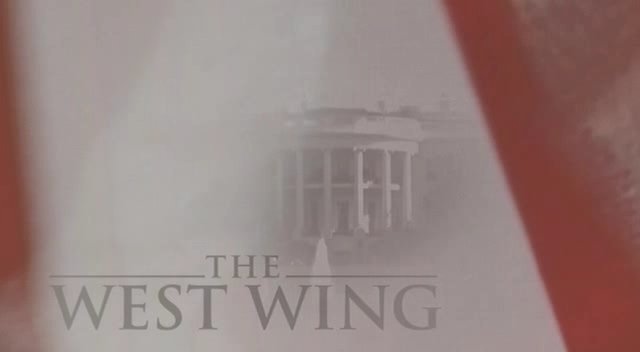
It's Friday night in the West Wing of the White House under President Josiah Bartlett, Vice President Hoynes has unexpectedly volunteered to defend the administration's policies against the oil industry, Communications Director Sam Seaborn is attempting to cut wasteful government reports, and the rest of the President's executive staff are expecting a legislative victory in the passing of the Family Wellness Act. The children's health care bill was passed in the House, negotiated in a conference committee by Deputy Chief of Staff Josh Lyman, and is expected to be easily passed in the US Senate that evening. However, as the staff is preparing to leave for the weekend, Senator Howard Stackhouse from Minnesota begins an unexpected filibuster of the bill.
A congressional privilege that takes its name from 18th-century pirates who would hold people hostage for long periods of time, the Senate filibuster stems from two sources: first, the Senate's lack of restrictions on debate and second, the limited number of days in a legislative session. Taking advantage of this, a single senator (or more likely, a small group of senators taking turns) can hold up all other Senate business by refusing to let a pending piece of legislation go to a vote.
When this happens, those supporting the filibustered piece of legislation must decide if it is worth all the time and business lost until the filibustering senators give up. Thus, filibustering senators can force the withdrawal of legislation they do not support even if they are in the minority.
White House Chief of Staff Leo McGarry and Press Secretary C.J. Cregg insist that the senior staff and the White House Press Corps stay around as Senator Howard Stackhouse filibusters from a Friday afternoon through a good part of the night. To pass the time and tell him why she can't make his 70th birthday, Cregg emails her father explaining what is going on:
"The rules of a filibuster are simple enough. You keep the floor as long as you hold the floor. What does that mean? It means you can't stop talking ever. You can't eat and you can't drink which is fine because you can't leave the chamber to use the bathroom either. But all that's nothing compared with this: You aren't allowed to sit down. You aren't allowed to lean on anything or for that matter anyone. If you ever have a free two hours and are so inclined, try standing up without leaning on anything and talking the whole time. You won't make it. I wouldn't make it. Stackhouse wasn't expected to last 15 minutes. He's 78 years old. He has a head cold. . . . Well, somebody forgot to tell Stackhouse, Dad, 'cause he just went into hour number eight."
Perhaps the most significant use of the filibuster in the 20th century was in opposing civil rights legislation. Southern Democrats and conservative Republicans used the filibuster to derail civil rights litigation several times in the 1950s and 1960s; Strom Thurmond holds the record for the longest filibuster, speaking for 24 hours and 18 minutes to block the 1957 Civil Rights Act.
The only way to stop a filibuster is through Senate Rule XXII, which allows the Senate to invoke cloture and thus cut off debate.
However, this provision has several limitations. First, cloture cannot be voted upon until two days after it is proposed, and second, a supermajority of 2/3 of those senators present and voting is required. Third, even if cloture is successful it still does not immediately cut off debate; Rule XXII allows for 30 more hours of debate before a vote on the legislation is finally called. Thus, even a filibuster ended by cloture will still cost more than three days of Senate business.
Proponents of the filibuster argue that the filibuster helps moderate extreme legislation, blocks passage of measures opposed by a popular majority, and is part of the culture of the Senate. Opponents say that it allows a small group of senators to override popular will and that it was never intended by the Founding Fathers.Eventually, staffer Donna Moss discovers that Senator Stackhouse is angry at the lack of federal funding for autism issues in the health care bill, and the President looks for a way to help end the filibuster by calling on his friends in the senate.
"There are so many days here where you can't imagine that anything good
will ever happen," C.J. tells her father.
"You're buried under a black fog of partisanship and self-promotion and
stupidity," Josh writes his mother.
"And a brand of politics that's just plain mean," Sam adds in his email
to his father.
But then C.J. continues that ". . . tonight I've seen a man with no legs
stay standing. . . and a guy with no voice keep shouting. And if politics brings
out the worst in people, maybe people bring out the best."
|
ASSIGNMENT Look for the following vocabulary words and how they are used during the episode: FILIBUSTER For fun, take the trivia quiz on the episode here: http://www.funtrivia.com/trivia-quiz/Television/The-Stackhouse-Filibuster-172267.html |
copyright 2010