Daddy Day Care
|
|
Cast & Credits
Charlie Hinton:
Eddie Murphy Phil: Jeff Garlin Miss Harridan: Anjelica Huston Marvin: Steve Zahn Ben Hinton: Khamani Griffin Kim Hinton: Regina King Directed By Steve Carr. Written By Geoff Rodkey.
Running Time: 93 Minutes. |
BY C.W. NEVIUS /May 9, 2003
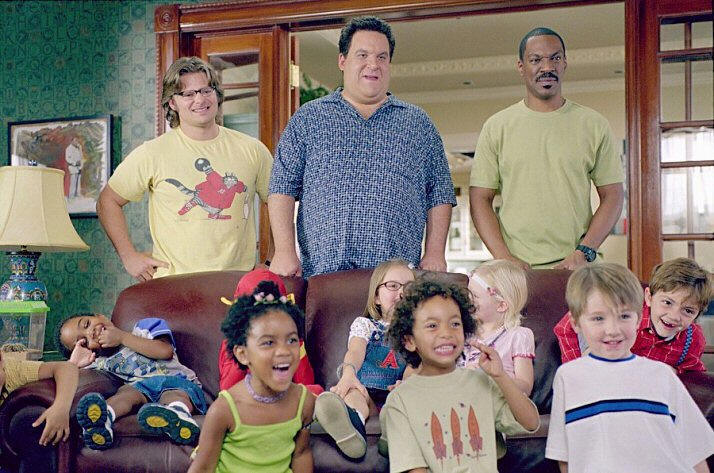
Charlie and his buddy Phil, are laid-off dads who lost their cushy jobs in the economic crunch. With their wives working, Phil and Charlie end up with the child care responsibilities. When they can't find jobs, they figure they can take care of 11 kids as easily as two, and open a day care center.
Charlie and Phil, a pair of advertising executives who are so into their careers that their families are way down on the list. When the duo fails to excite the public about the concept of vegetable cereal, they find themselves fired with no job prospects. Unemployment means an abrupt end to all that expensive day care for their children at the exclusive Chapman Academy, an institution ruled by the stern hand of Miss Gwyneth Harridan.
While looking for a job, Charlie is left with the task of looking after his 4-year-old son Ben while his wife Kim works. He comes up with what seems like a brilliant idea: If he and Phil can handle the care of two kids, why not branch out and supervise around 10? They figure it'll be a piece of cake.
And guess what? Things go perfectly. The kids are calm and well behaved, there are no potty problems, and nothing gets broken.
Right.
Actually, the guys find out that they know nothing about taking care of kids, the day care posse ransacks the house, and Charlie and Phil take a pounding from the pip-squeaks. The hapless dads are pretty amusing.
"What we need," Charlie says at one point, "is structure and planning."
"No," replies Phil, "Ritalin and leashes. That's what we need."
Eventually they get the hang of it and their bizarre venture manages to take off. They become so successful that they end up bringing in a third caretaker, Marvin, an overgrown kid himself who speaks kids' language, but who is such a space cadet that he read "Dr. Spock's Baby and Child Care" because he thought it was about "Star Trek." The group of men begins teaching the children how to read, play games, interact and have fun at the same time. Charlie and Phil use their newfound skills with kids to bond with their own children and slowly learn to appreciate the real joy that comes with fatherhood.
Their joy is threatened by Harridan and a showdown ensues between the daddies and the "baddest" mother of them all.
|
ASSIGNMENT For the most part, these topics are listed in the order in which they appear in the movie. A topic that reoccurs will be listed only once.
|