AP AMERICAN GOVERNMENT
Unit 3: Congress
9/25 - 10/15
UNIT 3 CONTENT MAP
CATCH-ALL PARTY
IDEOLOGICAL PARTY
DEMOCRAT

REPUBLICAN
LIBERTARIAN

REALIGNMENT
PARLIAMENT
PLURALITY SYSTEM
PROPORTIONAL SYSTEM
COALITION
CLOSED PRIMARY
OPEN PRIMARY
CROSSOVER VOTING
CENSUS
REDISTRICTING
GERRYMANDER

SAFE SEAT
INCUMBENT

REPRESENTATIONAL
ORGANIZATIONAL

ATTITUDINAL
PRESIDENT PRO TEMPORE
SPEAKER OF THE HOUSE
MAJORITY LEADER

MINORITY LEADER
WHIP
COMMITTEES
QUOROM
EARMARK
CAUCUS
FILIBUSTER

IMPEACHMENT

INTEREST GROUP
LOBBYING
SOFT MONEY

REVOLVING DOOR
PAC
2002 BCRA
527 ORGANIZATION


Court Cases:
CITIZENS UNITED v FEC
WEEK 6
9/24 - 9/28
LESSON IN CLASS ASSIGNMENTS
Wednesday
Lesson 1
  • Debrief Unit 2 Test

Homework: Bring Electronic Device Tomrrow for Political Party Research!

Read:  Magelby 25th,  Chapter 7 pp. 185-195 (This is Chapter 5, pp. 128-134 in the Brief Edition)

Thursday
Lesson 2

DISCUSSION QUESTIONS:

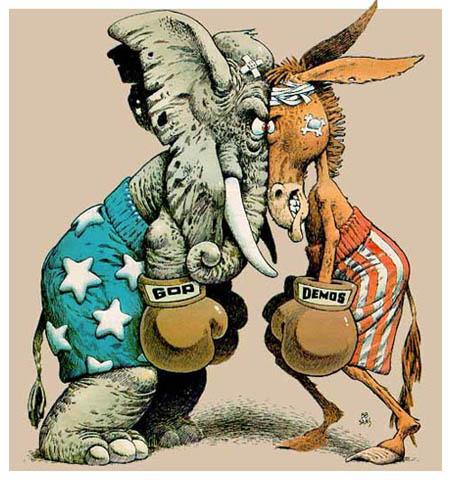
  • What is a Political Party?
  • Why are some political parties stronger and more electorally successful than others?

Bring: Electronic Device for Political Party Research!

Assignment:  Political Party Presentation Project

This MUST be ready by the beginning of class Friday--any assignment turned in late will be penalized 1 point.

Read:  Magelby 25th,  Chapter 7 pp. 196-207 (This is Chapter 5, pp. 134-145 in the Brief Edition)

Friday
Lesson
3

ESSENTIAL QUESTION: What are the issues and ideologies of political parties in America?

  • Political Party Presentation Project

Assignment:  Political Party Presentation Project

You MUST be ready to present by the beginning of class TODAY--any assignment turned in late will be penalized 1 point.

Read:  Magelby 25th,  Chapter 9 pp. 240-247 (This is Chapter 6, pp. 188-195 in the Brief Edition)

WEEK 7
10/1 - 10/5
LESSON IN CLASS ASSIGNMENTS
Monday
Lesson 4

ESSENTIAL QUESTION: What are the functions of political parties in America?

  • Types of Political Parties
    • Ideological
    • Catch-All
  • The Two-Party System
    • Pluralist vs Proportional Election Systems
    • Third Parties
    • Realignments
  • The structure of Poltical Parties
    • Leadership
    • Conventions
    • Platforms
Quick Notes: Unit 3 Part 1 Political Parties

Homework
: Bring Electronic Device Tuesday for Article I GRQs!

Read:  Magelby 25th,  Chapter 11 pp. 312-320 (This is Chapter 8, pp. 262-266 in the Brief Edition)
Tuesday
Lesson
5

ESSENTIAL QUESTION: What are the constitutional powers and functions of Congress?

  • Breakdown of the US Constitution
    • Article I

Quiz: Quicknotes 3.1

 Bring: Electronic Device for Chapter GRQs!

Assignment:  GRQ Unit 3

A great reference is the official US Senate Annotated Constitution linked here!

Answers must be In Your Own Words.

This is a 3 point (FA) which WILL be checked tomorrow during the GRQ Quiz.

Read:  Magelby 25th,  Chapter 11 pp. 304-312 (This is Chapter 8, pp. 245-261 in the Brief Edition)

Wednesday
Lesson 6

ESSENTIAL QUESTION: Who is in Congress?

  • Parliament and Congress
  • Elections
  • The Incumbent Advantage
  • Political Polarization

Quiz: Open GRQ (FA) quiz


Read: 
Magelby 25th,  Chapter 11 pp. 312-320 (This is Chapter 8, pp. 262-266 in the Brief Edition)
Thursday
Lesson
7

ESSENTIAL QUESTION: What is the incumbency advantage?

Assignment: Complete The Redistricting Game simulations.

Answers must be In Your Own Words.

This MUST be turned in BEFORE the end of class today--any assignment turned in late will be penalized 1 point.

Read:  Magelby 25th,  Chapter 11 pp. 304-312 (This is Chapter 8, pp. 245-261 in the Brief Edition)

Friday
Lesson
8

West Wing: The Stackhouse Filibuster

Video Questions:

  • What are the rules to filibustering?  Name at least 5.
  • What was the original purpose of the filibuster rule in the Senate?
  • Does the House have filibusters? Why or why not?
  • What bill caused Senator Stackhouse to filibuster? 
  • What was the intent of the bill?
  • What did Senator Stackhouse want to attach to the Act?
  • Why didn’t the President's Assistant Josh Lyman agree to Stackhouse’s request?
  •  What is a Christmas Tree Bill?  (Hint: think about what happens on a Christmas tree.)
  • What does the President discover about the motivation behind Stackhouse’s filibuster? Is this attitudinal, organizational, or representational behavior?
  • What was Donna’s suggestion to allow Stackhouse to yield the floor?
  • How did the filibuster end?
  • Should the Senate revise the rules on floor debate? Why or why not?

*Makeup: Watch Democracy in American #6: The Legislative Process and answer the following questions:

1.       Can legislatures ever be efficient policymakers?

2.       Should they be efficient?

3.       How does Congress represent the founders' intent to provide for a series of checks and balances?

4.       Legislatures are chaotic places. Why?

5.       Should legislators represent their constituents or the larger political system?

6.       Can you think of times when unpredictable outside forces created the opportunity for major legislative action?

7.       What does the ability to negotiate and compromise tell us about legislators and the legislative process?

8.       Is bipartisan support for legislative bills unusual?

9.       What should a legislator do if the constituents' views clash with the representative's?

10.    What interests should a representative represent?

11.    Should legislators do what is best for their constituents or what is best for the nation?

12.    What kinds of services should legislators perform for their constituents?

13.    Are there services that legislators should not provide?

14.    What is it that constituents want from legislators?

Watch:  The Stackhouse Filibuster

Be prepared to answer a short quiz based on the questions listed during the video, and discuss the answers.

Answers must be In Your Own Words.

This MUST be turned in BEFORE the end of class today--any assignment turned in late will be penalized 1 point.Read:  Magelby 25th,  Chapter 6 pp. 157-168 (This is Chapter 5, pp. 145-153 in the Brief Edition)

WEEK 8
10/8 - 10/12
LESSON IN CLASS ASSIGNMENTS
Monday
Lesson
9

ESSENTIAL QUESTION: How does a bill becomes a law?

  • The structure of Congress
    • Leadership
    • Committees
    • Caucuses
    • Filibusters
  • Amendments
    • Earmarks
    • Logrolling
    • Pork Barrel
Quick Notes: Unit 3 Part 3 Laws

Read:  Magelby 24th,  Chapter 6 pp. 169-180 (This is Chapter 5, pp. 153-183 in the Brief Edition)

Tuesday
Lesson
10
ESSENTIAL QUESTION: What are special interest groups?
  • Social Movements
  • Issue Advocacy
  • Interest groups
  • Activities:
    • Lobbying
    • Testifying
    • Fund-raising
    • Mobilizing

Quiz: Quicknotes 3.2 - 3.3 quiz on Congress

Wednesday
Lesson
11

ESSENTIAL QUESTION: How do special interest groups influence Congress?

Using your knowledge of American government define and give an example from the film of the following vocabulary terms.

  • Lobbying
  • Earmark
  • Special Interest Effect
  • Log Rolling
  • Pork Barrel Spending
  • Bureaucratic Capture


Watch:  The Distinguished Gentleman

Discussion: After watching the excerpt, d
o you believe that good government needs lobbyists, or should they be banned as inefficient and detrimental to the process of governing? Justify your answer.

Thursday
Lesson
12

ESSENTIAL QUESTION: What are the functions of lobbyists?

West Wing: Big Block of Cheese Day

Video Questions:

  • What is Big Block of Cheese day at the White House?
  • What is the tradition behind Big Block of Cheese day? Who started it?
  • According to Chief of Staff Leo McGarry, what does the Big Block of Cheese symbolize?
  • What is President Bartlett and his staff doing after the morning meeting? Why does the President do this regularly?
  • What group is Speechwriter Sam Seaborn's first appointment? What is their issue?
  • What group is Press Secretary CJ Cregg's first appointment? What issue do they want addressed?
  • What group does Communications Director Toby Ziegler meet with? What are their issues?
  • What group is Press Secretary CJ Cregg's second appointment? What issue do they want addressed?
  • Why does the policewoman think it's important for Toby to address the protesters?
  • Why does President Bartlett think it is important to open the doors of the White House to the people?
  • Do you think the framers of the Constitution would agree or disagree with the President and Leo? Why or why not?

*Makeup: Watch Democracy in American #6: The Legislative Process and answer the following questions:

1.       Can legislatures ever be efficient policymakers?

2.       Should they be efficient?

3.       How does Congress represent the founders' intent to provide for a series of checks and balances?

4.       Legislatures are chaotic places. Why?

5.       Should legislators represent their constituents or the larger political system?

6.       Can you think of times when unpredictable outside forces created the opportunity for major legislative action?

7.       What does the ability to negotiate and compromise tell us about legislators and the legislative process?

8.       Is bipartisan support for legislative bills unusual?

9.       What should a legislator do if the constituents' views clash with the representative's?

10.    What interests should a representative represent?

11.    Should legislators do what is best for their constituents or what is best for the nation?

12.    What kinds of services should legislators perform for their constituents?

13.    Are there services that legislators should not provide?

14.    What is it that constituents want from legislators?

Watch: West Wing: Big Block of Cheese Day

Be prepared to answer a short quiz based on the questions listed during the video, and discuss the answers.

Answers must be In Your Own Words.

This MUST be turned in BEFORE the end of class today--any assignment turned in late will be penalized 1 point.Read:  Magelby 25th,  Chapter 6 pp. 157-168 (This is Chapter 5, pp. 145-153 in the Brief Edition)

Friday
Lesson
13

ESSENTIAL QUESTION: How do you write an effective AP American Government DBQ?

  • Review and Revise AP Essay

Assignment: In groups, Read for the Rubric, Organize your Essays, and OUTLINE the possible ideas and conclusions which would recieve credit under the COMPLETE-CORRECT-CONNECT guidelines.
WEEK 9
10/15 - 10/19
LESSON IN CLASS ASSIGNMENTS
Monday
Lesson
14

You will be responsible for one of the following three essays:

  1. Congressional reapportionment and redistricting are conducted every ten years. When redistricting is conducted, politicians often engage in gerrymandering.
    • Define congressional reapportionment and explain one reason why it is important to states
    • Define congressional redistricting
    • Explain two goals of politicians when they gerrymander during redistricting
    • Describe two limits that the United States Supreme Court has placed on congressional redistricting.
  2. Over the last several decades, the composition of the Democratic and Republican parties has changed in important ways. In particular, a major partisan shift has occurred in the South.

    • Identify one specific trend evident in party voting in the South since 1980.

    • Choose two of the following.  Define each and explain why each would help or hinder party realignment in the South over the past 30 years.

       -Incumbency advantage

       -Gerrymandering

       -Closed Primaries

    • Identify whether changes in party composition would be reflected more quickly in presidential or congressional elections, and explain the structural reasons for this
  3. Members of Congress are charged with three primary duties—writing laws, overseeing the implementation of laws, and serving the needs of their constituents.
    • Describe the role of each of the following in lawmaking

       -Senate filibuster

       - Speaker of the House

       -Conference committees

    • Identify and describe one method by which Congress checks the Executive branch.
    • Define casework  and explain how it affects members’ attention to legislation

Review Unit 1, 2 and 3: Use online chapter notes, GRQs, and Textbook site practice section quizzes.

Tuesday
Lesson 15
  • Unit 3 Test

Bring:  Pencil for Unit 3 test;

This test will consist of 35 multiple choice questions, 5 definition questions, and one brief essay from the material and concepts in Units 1, 2, and 3.

The test will be counted out of 50 points.